I took a day trip from Tokyo to Hakone…. And had a terrible time.
As two seasoned travelers, my friend and I set a day aside from our ten-day Japan trip with the hope of seeing nature, especially the ever-shy Mount Fuji. Between us, we have traveled to well over 35 countries and every US state, so this task seemed easy at first glance; especially as we had successfully been traveling Japan for a week at this point, but due to our self-proclaimed failure, we lost a day in Japan.
So that you don't make the same mistakes we did, here’s where we went wrong and what we would have done instead to have properly experienced the beautiful Hakone, Japan.

Getting to Hakone From Tokyo
Before arriving in Hakone, you have to plan your route to get there. My friend and I opted to take the Romancecar from Shinjuku Station earlier in the morning. At first, we thought this option was surprisingly cheap as the tickets were around $7 each way, but it is important to note it will also costs over an additional 2,000 JPY (Japanese Yen) on your transportation card as well, so the price not only for the travel, but this day seemed to add up at every turn.
The train tickets do include an assigned seat, which is nice, and the train is direct, taking under two hours to get from Tokyo to Hakone.
As we were on the train, we looked at the map of Hakone and its various landmarks and started making a plan in our minds. This turned out to be a rookie mistake: we didn’t properly map each stop out at this time and only looked at the map visually.
Our biggest problem was that, on a map, many of the hot spots in Hakone look easily accessible, and with the right plan, they could be, but just winging it is nearly impossible.
As we got off the Romancecar at Hakone-Yumoto station, we looked up the best route to Lake Ashi. Our first of many missteps was just finding a way to the lake, and not picking where we wanted to go specifically. We ended up spending nearly two hours and 2,000 JPY sitting on a bus to a stop that really didn’t have much to do or see. Once we had realized this was a bust and that it would take over 20 minutes for a bus to arrive, we had to plan not only what to do, but also a route that would slowly get us back to the train station.
We ended up taking the bus again to Owakudani, which cost us around 1,300 JPY. Notice that the numbers keep adding up, but all we had done was sit on transportation for hours.
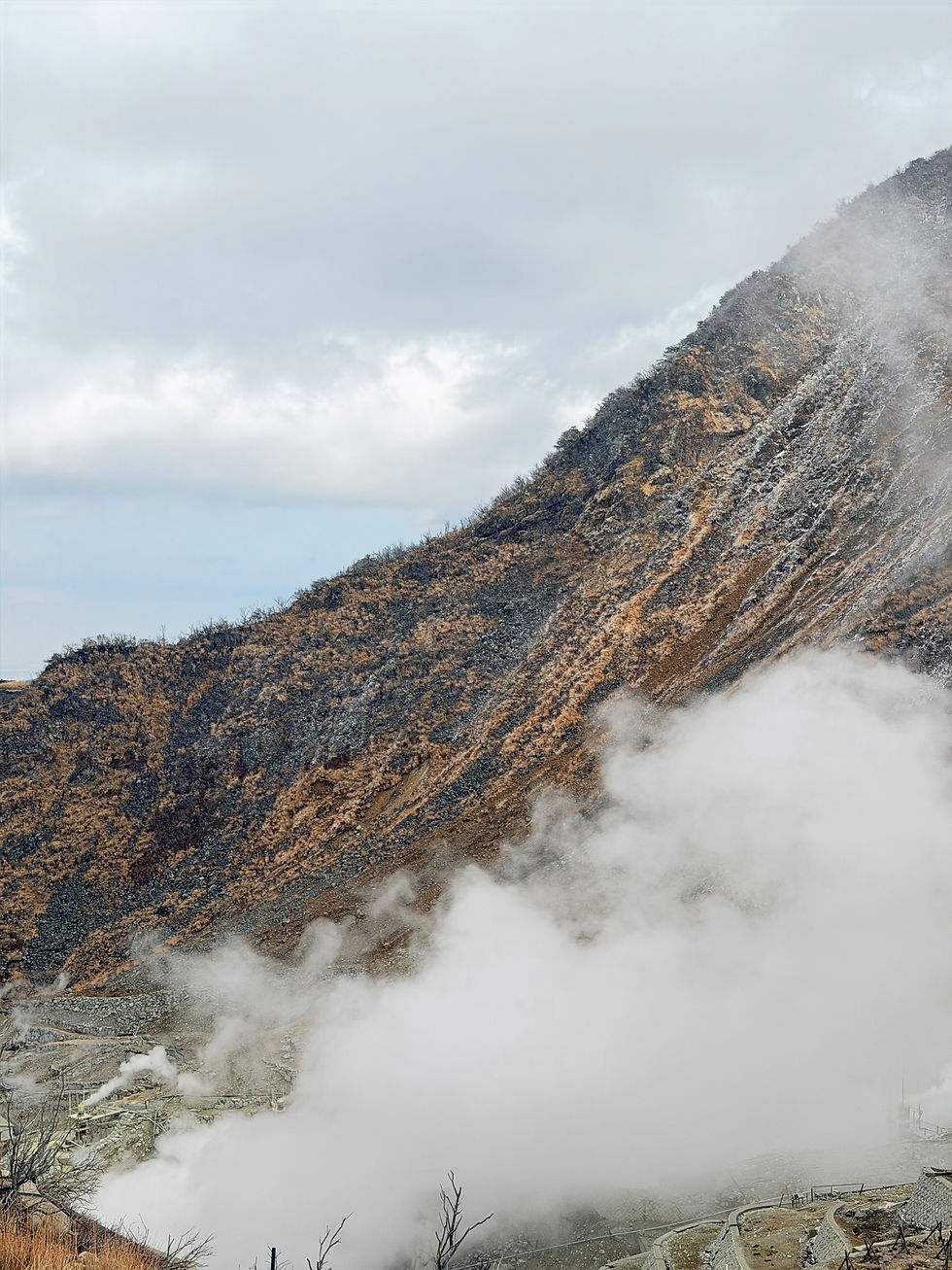
From here, we at least got a partial view of the bottom half of Mount Fuji, which was exciting. We also took in the stunning views of hot springs and the volcanic valleys from lookout points in the area. We then decided to take the Hakone Ropeway, which is similar to a cable car, towards Gora, which was in the direction of the train station we planned to end at.
We bought the tickets at the station for another 2,000 JPY and were told the ticket would get us to Gora. However, this was not the case: after transferring to a funicular from the cable car and trying to exit the station, we were charged just under an additional 400 JPY. Again, our frustrations continued to mount as it seemed everything we did cost extra throughout our day. We were hitting the point where we were almost nervous we’d get charged for breathing in too much air at this point.
Once in Gora, we went to a garden we saw advertised, which, unsurprisingly at this point, also cost a few hundred Yen to enter. It almost felt like we were being punked as we simply couldn’t seem to catch a financial break in Hakone. The park took about five minutes to walk through, which added to the somewhat comical disbelief we had started to feel towards our day.
At this point, we were getting ready to cut our losses and just go back to Tokyo. We couldn’t afford to be in Hakone any longer financially, mentally, and emotionally.

We finished our day at the Hakone Open-Air Museum, a short walk from the garden in Gora. This was definitely the highlight of our time in Hakone. The museum had plenty of statues, a cool onsen-esque foot bath with a stunning view, and a whole Picasso exhibition.
From here, we walked for less than five minutes, then took about a 40-minute train ride back to Hakone-Yumoto Station and waited for the next Romancecar to get us back to Tokyo.
What We Would Have Done Instead to Have the Perfect Day in Hakone
Prior to our day trip, we discussed the idea of joining a scheduled tour of Hakone. Seeing as we have been able to visit many cities on our own with ease before, we decided against this idea. Looking back, had we joined a tour, we would have seen everything we wanted and saved money in the long run.
Typically, these tours start in Tokyo and take a coach to Hakone. From there, tourists can visit the Hakone Shrine, sail on a Hakone pirate ship, ride the Hakone Ropeway, explore Owakudani, and visit Yamanakako Swan Beach all at one cost within the day.
At the very least, if we had not booked a tour, we should have gotten the Hakone Free Pass which includes the cost of the ropeways, buses, and trains and can give discounts to some attractions. Honestly, between the two of us, we had never been somewhere with so many seemingly hidden charges, so at first this seemed like a true waste of money. But as it turns out, we were the ones wasting our own money and time.
Fuji-San; The Ever Ellusive Mt. Fuji and Seeing It
The one thing out of our control that was the true nail in the coffin of our day was the visibility. Mount Fuji is notoriously shy, and we had a day when he was definitely hiding. It is possible that if we had come earlier with a tour, we could have had a better view, since the early morning was clearer, but we’ll never truly know.
Should you go to Hakone?
The important question is: Is Hakone worth a visit? I know this piece makes it sound like a miserable way to spend a day in Japan, but I truly think it would have been a perfect trip out of the city with better preparation. The landscapes are stunning, and if you have time, the mountainous town boasts many beautiful, well-run ryokans (traditional Japanese hotels) and plenty of gorgeous onsens that seem worth the visit alone. Should I find myself in Japan in the future, I hope I get the pleasure of visiting countless more times. Not only would I consider a trip to Hakone again, I’d even consider the idea of spending the night.


Comments